
Restoring and Protecting the Sacred

Visitors to some pueblo churches in the Diocese of Gallup may soon take notice of new restoration projects - a new roof on the mission of Acomita, or a repaired cloister at San Esteban in Acoma.
These initiatives are being undertaken as a partnership between the Pueblo of Acoma and New Mexico-based cultural heritage preservation group Nuevo Mexico Profundo.
Frank Graziano, one of NMP’s founders, described how the organization was first established in 2019. While conducting research for a book on New Mexico’s historic churches, he noticed how many pueblo churches were falling into disrepair, and how many of the villagers and parishioners had few resources for preservation.
“Little by little, we’ve grown. We do tours to cultural heritage sites - most of them churches. And we restore historic churches and also moradas, and we do art conservation of santero artworks that are in the churches.”
A morada is a type of informal chapel or religious gathering-place, often used in places where visits from a priest were few and far between. And santero art (see our story on Page 10) is a method of depicting the saints which is totally unique to the state of New Mexico.
But for Graziano - and many of the Pueblos he works with - the importance of historic preservation goes beyond religious significance.
“If you look at the culture around us, it’s like, there’s this process of homogenization going on - it goes to the lowest common denominator of vanilla and plastic,” he said. “That church is the centerpiece of the village. If you knock down that church, it’s like a scar or a void. I mean, it would destroy the visual sense of the village. But in addition to that, the churches are like repositories of cultural heritage for hundreds of years. And there’s so much emotional attachment to them by people in the villages.”
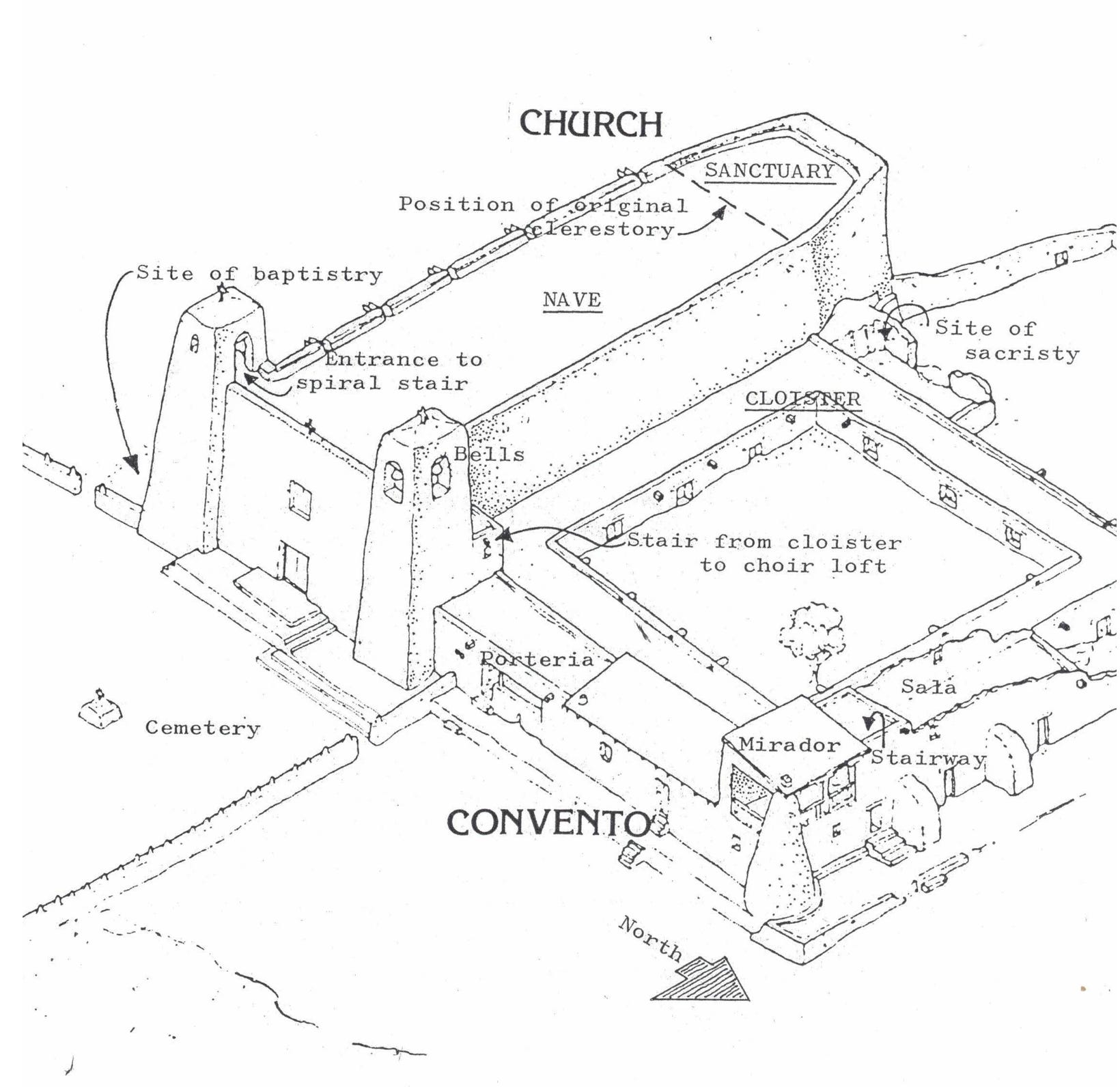
One project currently underway is the cloister and courtyard at San Esteban del Rey in Acoma Pueblo. Much of the funding has been provided by the Pueblo, which has committed to preserving many of Acoma’s historic buildings, and fundraising from Nuevo Mexico Profundo.
During the research phase, Graziano discovered that the inside of the cloister has hidden layers of murals.
“An archaeologist went out there in 1976 and he did some tests on the walls. And there are layers of murals on all the walls around the gallery. And who knows what state they’re in because, you know, even in ‘76 when he saw them, that was 50 years ago.”
If there is a possibility of restoring the murals, Graziano hopes to include them in the project.
Mark Thompson, a tribal member of Acoma Pueblo with an extensive education background in construction and development, is the project manager for the restoration work at San Esteban and other projects in the villages at McCartys and Acomita.
“When the tribal council and the tribal administration approached me, the tribal council had allocated some funds to help in the restoration of the two churches,” he recalls. “And then we came across New Mexico profundo and Frank Graziano. We leveraged both his fundraising and the tribe’s funding to get the project done. I was already contracted pro bono to be the project manager for several historic structures within the community.”


Thompson didn’t feel that it was his place to speak for the Pueblo as a whole, but noted that as a Catholic and tribal member of Acoma, he feels responsible for helping to preserve all aspects of tribal spirituality.
“They’re historic structures obviously, but they’re more than that. It represents our faith. I think it’s who we are. They’re critical parts of the community and part of our core values and belief in Christ, and having some place to call home when we want to worship.”
He also emphasized the greater efforts of the local church council and restoration committee.
“It just wasn’t me, Mark Thompson…the church council and the church restoration committee that are made up of parishioners and members within the community all contributed to the restoration effort. It was a team effort. That’s important.”
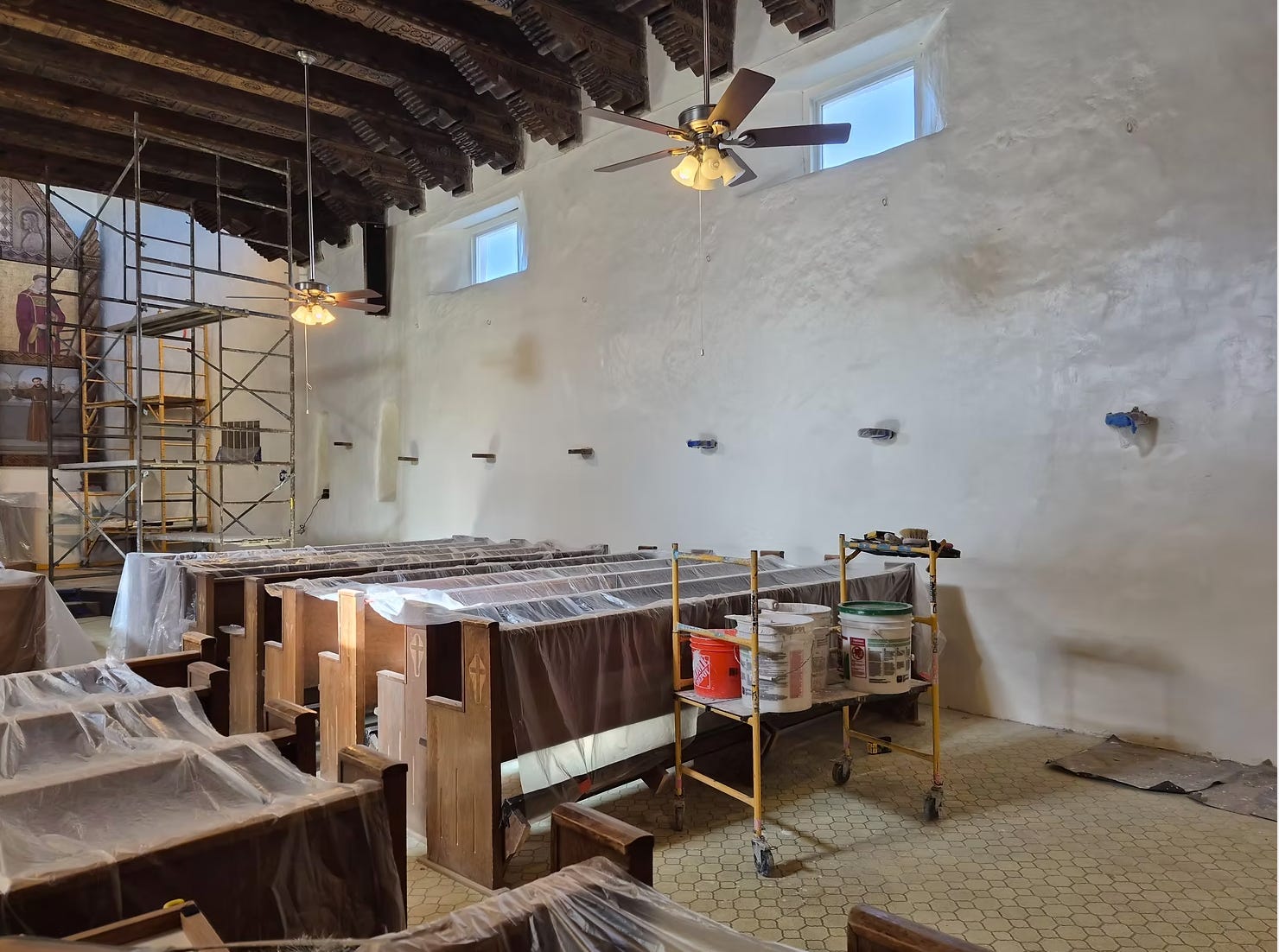
For the local Acoma community, for Thompson, and for Graziano, the work is all part of a greater effort to preserve the unique spiritual, cultural, and historical heritage of New Mexico villages.
“There’s a lot of people who see it in historic preservation terms. I see it more in like cultural heritage terms,” Graziano said. “I mean, the building is important, but the building is a symbol. You know what I mean? It’s great to preserve the building like it were, I don’t know, a fort or a historic building. But the churches also have so much meaning attached to them.”